


Date: Monday, March 23, 2026
Time: 4:00 – 9:00 pm ET
Location: Blueprint for Men, 5050 Layton Lane, Apison, TN 37302
Cost: $30
REGISTER
Basic life support (BLS) for healthcare providers For all healthcare providers Basic Life Support (BLS) American Heart Association certification training is vital. In the U.S., there is a mandated American Heart Association (AHA) protocol for the immediate treatment of critical events that must be closely followed by all healthcare providers.
Acquiring the American Heart Association BLS CPR certification is the responsibility of all healthcare providers that are providing medical care to the general public, and with frequent changes being made to the AHA guidelines, BLS renewal is also mandatory and required every two years.
Recommended for: MDs, RNs, EMTs, Dentists, Pharmacists, and Medical Personnel
The BLS CPR class covers:
- Adult, Child, and Infant CPR
- Conscious and Unconscious Choking for victims of all ages
- Automated External Defibrillator (AED) use and special considerations
- Breathing Barriers, Bag Valve Masks, and 2 Rescuer CPR
- Cardiopulmonary Emergencies and Special Resuscitation Situations
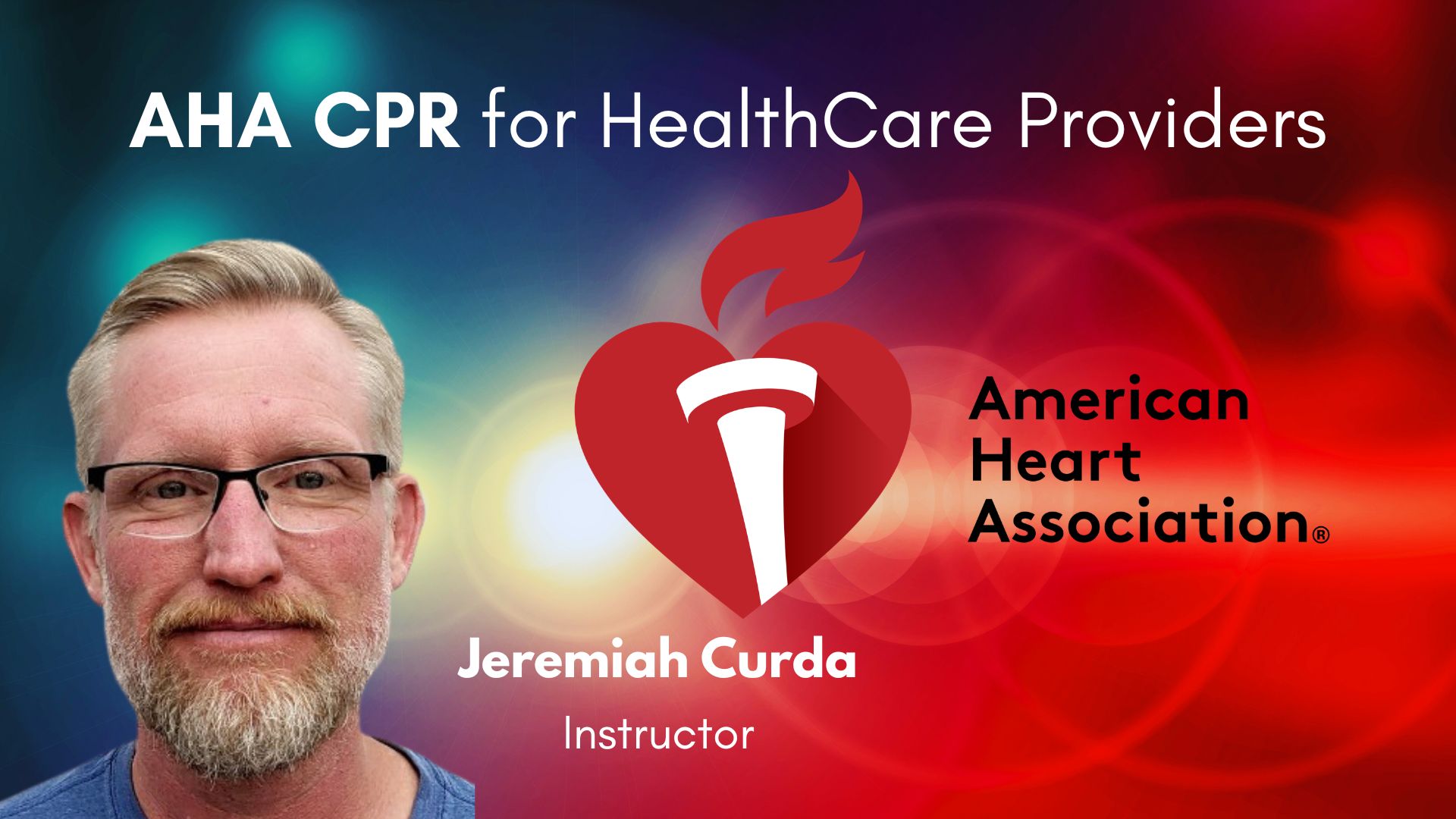
Your Instructor:
Jeremiah Curda has over 15 years of 911 EMS experience including, ground transport, critical care transport and flight paramedic for a major trauma center. Jeremiah holds an A.A.S. in Emergency Medical Services.
AHA Legal Position
American Heart Association staff members do not give personal medical advice or answer personal medical questions.
Qualified staff members in the Office of Science Operations at our National Center can answer scientific questions. National Center, affiliate and division staff are allowed to offer the Association’s official policy or statement about a given medical issue.
The Association cannot make referrals to physicians, cardiac surgeons, nurses, physicians assistants, nutritionists, physical therapists or occupational therapists. We can’t maintain current information on whether such persons meet professional criteria across the wide variety of medical disciplines and geographic regions. Nor can we know enough about an individual’s medical history, healthcare needs, financial or insurance situation to make proper referrals. You can get such information from your local medical association or society.
Our association does not provide recommendations to individuals seeking healthcare sites, health maintenance organizations, hospitals, clinics or cardiac rehabilitation centers. We can’t maintain current information on whether such places around the country meet accepted medical standards. Nor can we know enough about an individual’s personal medical history, healthcare needs, financial or insurance situation to make proper referrals. You can get such information from your local health department or medical association or society.
The AHA does not set protocols for health care organizations. We can only provide our Scientific Statements and Guidelines as a point of reference. Because the AHA is not a regulatory agency nor a clinical provider, the Association cannot govern what procedures health care facility staff should follow, including during emergency situations. Most hospitals, EMS, and other health care organizations have a committee, e.g., a critical care committee, that should advise them on protocols. Many providers also have accrediting organizations that conduct inspections of facilities to ensure compliance.
The AHA cannot address complaints about health care practitioners or institutions. If you seek assistance regarding care received, please contact that clinical care provider directly. Generally, most practices and facilities have a patient advocate or ombudsman dedicated to handling complaints, in the best position to resolve your issue. You can also contact the local licensing board of the practitioner or institution.
We also do not provide testimony or legal opinions to litigants in medical malpractice cases.